
Yes, according to scientific studies and global health organizations, 5G is safe and does not pose health risks when operated under international safety guidelines.
On one side, people are excited about lightning-fast internet, autonomous vehicles, and smart cities powered by 5G. On the other side, concerns about radiation, cancer risks, and long-term exposure keep circulating on social media.
Let’s separate facts from myths and understand whether 5G is truly safe or not.
Table of Contents
- Introduction
- Why People Ask – Is 5G Internet Safe for Health?
- Understanding What 5G Really Is
- How 5G Radiation Works
- Scientific Evidence on 5G and Health
- Myths vs Facts About 5G
- Pros and Cons of 5G for Daily Life
- How Safe is 5G Compared to 4G and Wi-Fi?
- What Global Health Authorities Say About 5G
- Conclusion
- FAQs
Why People Ask – Is 5G Internet Safe for Health?
Whenever a new technology comes, it naturally raises questions. With 5G, the doubts mainly revolve around radiation exposure.
Common concerns include:
- Can 5G cause cancer?
- Does it affect fertility?
- Will constant exposure harm children?
These worries are understandable because 5G uses higher frequency bands compared to 4G.
Understanding What 5G Really Is
5G (fifth-generation wireless technology) is designed to deliver:
- Ultra-fast speeds (10–100x faster than 4G)
- Low latency (essential for gaming, telemedicine, and IoT devices)
- Massive device connectivity (smart homes, cars, industries)
In simple terms: 5G is just an upgraded wireless network, not fundamentally different from 4G or Wi-Fi.
How 5G Radiation Works
All wireless technologies, including radio, Wi-Fi, 3G, 4G, and now 5G, emit non-ionizing radiation.
Here’s a quick comparison:
| Radiation Type | Examples | Harmful to DNA? |
|---|---|---|
| Ionizing | X-rays, Gamma rays | Yes, can damage DNA |
| Non-Ionizing | 5G, 4G, Wi-Fi, Radio waves | No, not enough energy to damage DNA |
So, unlike X-rays, 5G radiation cannot break DNA or directly cause cancer.
Scientific Evidence on 5G and Health
Research so far shows no conclusive evidence that 5G is harmful.
- World Health Organization (WHO): No adverse health effects have been linked with wireless technologies like 5G.
- ICNIRP (International Commission on Non-Ionizing Radiation Protection): Exposure levels from 5G remain well below safety limits.
- FDA (US Food and Drug Administration): Current data does not show any health risks from 5G exposure.
Myths vs Facts About 5G
| Myth | Fact |
|---|---|
| 5G causes cancer | No scientific evidence supports this claim |
| 5G weakens immunity | False, no link between 5G and immune system |
| 5G spreads viruses | A conspiracy theory with no scientific basis |
| 5G towers emit dangerous radiation | 5G uses non-ionizing radiation, safe under limits |
Pros and Cons of 5G for Daily Life
Pros:
- Faster downloads and streaming
- Better telemedicine and remote education
- Boosts AI, IoT, and smart cities
Cons:
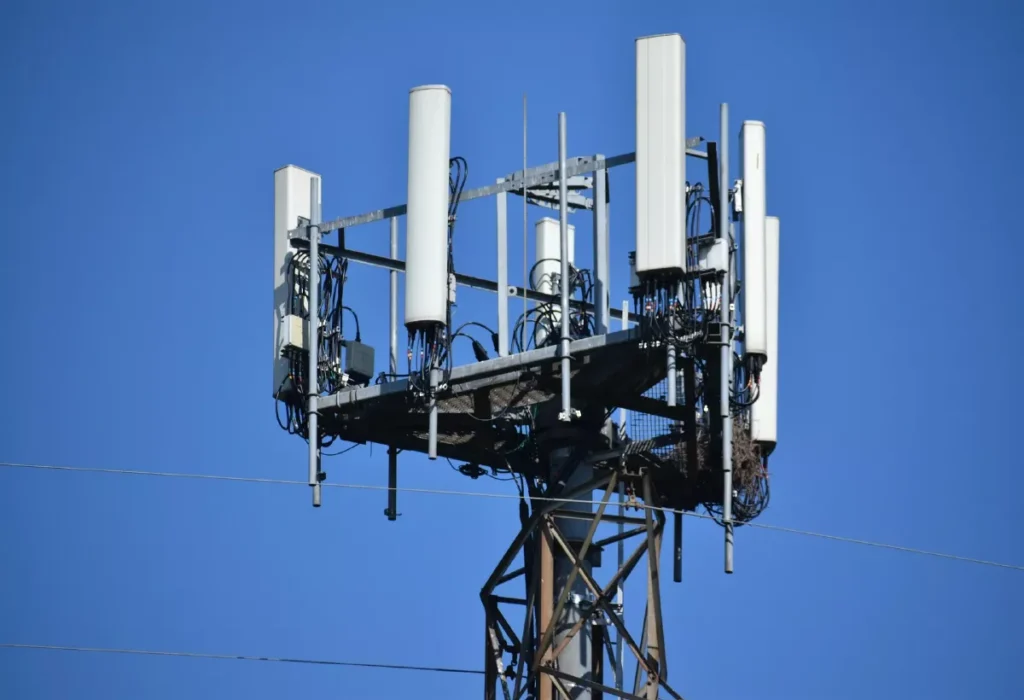
- Requires more towers, leading to visual pollution
- Higher costs for infrastructure
- Misconceptions causing unnecessary panic
How Safe is 5G Compared to 4G and Wi-Fi?
| Technology | Frequency Range | Health Impact |
|---|---|---|
| Wi-Fi | 2.4 GHz – 5 GHz | Safe under guidelines |
| 4G | 700 MHz – 2.6 GHz | Safe under guidelines |
| 5G | 24 GHz – 100 GHz (millimeter waves) | Safe under guidelines |
Even though 5G uses higher frequencies, the radiation is still non-ionizing and weaker compared to natural sunlight.
What Global Health Authorities Say About 5G
- WHO: No evidence of health risks from 5G.
- ICNIRP: Radiation limits protect all people, including children.
- CDC: More research is ongoing, but current exposure is safe.
In short, major health authorities agree that 5G is safe when used within regulated limits.
Conclusion
So, is 5G Internet safe for health?
Yes, according to scientific studies and global health organizations, 5G is safe and does not pose health risks when operated under international safety guidelines.
The real challenge is not health, but misinformation. As with any new technology, it’s important to rely on facts, not fear.
FAQs: Is 5G Internet Safe for Health?
Q1: Is 5G Internet safe for health?
Yes, according to WHO, ICNIRP, and FDA, 5G is safe under regulated radiation exposure limits.
Q2: Can 5G radiation cause cancer?
No, 5G uses non-ionizing radiation which doesn’t damage DNA, unlike X-rays or gamma rays.
Q3: Is 5G safe for children?
Yes, exposure levels are far below harmful limits for children as well as adults.
Q4: Does 5G affect fertility or pregnancy?
No scientific evidence links 5G exposure to fertility issues or pregnancy complications.
Q5: Can living near a 5G tower harm health?
No, radiation from towers is very low compared to safety thresholds.
Q6: Is 5G more dangerous than 4G or Wi-Fi?
No, all use non-ionizing radiation. 5G is not inherently more harmful.
Q7: Can 5G weaken the immune system?
No, there is no biological mechanism or study showing 5G affects immunity.
Q8: Does 5G cause headaches or sleep problems?
Current studies don’t show a proven link. Such symptoms are often stress-related.
Q9: Can 5G waves penetrate the human body deeply?
No, higher-frequency 5G waves are absorbed mostly by the skin and don’t penetrate deep organs.
Q10: Are millimeter waves in 5G dangerous?
No, millimeter waves are non-ionizing and safe at regulated levels.
Q11: Is 5G radiation cumulative over time?
Exposure remains below harmful limits, even with long-term use.
Q12: Can 5G affect the brain?
No scientific evidence shows that 5G radiation affects brain function or memory.
Q13: Does 5G cause anxiety or depression?
No, but misinformation around 5G can cause stress and fear.
Q14: Can 5G waves interfere with pacemakers?
Medical devices are tested for safety. Interference risk is very low and regulated.
Q15: Do I need to buy special shields against 5G?
No, shields marketed as “anti-5G” have no scientific backing.
Q16: Is 5G exposure higher indoors or outdoors?
Outdoors near towers exposure is higher, but still within safe limits. Indoors, building walls reduce exposure further.
Q17: Does 5G heat the body like a microwave?
No, 5G operates at very low power compared to microwave ovens.
Q18: Can 5G harm plants or animals?
Studies so far show no harmful effects on plants, birds, or animals.
Q19: Is 5G harmful to bees?
No scientific evidence supports the claim that 5G affects bee populations.
Q20: Does 5G exposure differ by phone model?
Yes, different phones emit different SAR (Specific Absorption Rate) levels, but all are tested within safe limits.
Q21: What is SAR in mobile phones?
SAR measures how much radiation is absorbed by the body. 5G phones are regulated under SAR limits.
Q22: Can turning off 5G reduce radiation exposure?
Yes, but the reduction is minimal since 4G/Wi-Fi also use similar radiation.
Q23: Should pregnant women avoid 5G phones?
No, radiation levels are safe for everyone including pregnant women.
Q24: Is it safe to use 5G all day?
Yes, prolonged use does not increase health risks as long as exposure is below limits.
Q25: Does 5G affect eyesight?
No scientific research links 5G radiation with eye problems.
Q26: Can 5G networks trigger allergies or skin reactions?
No, non-ionizing radiation does not trigger allergic reactions.
Q27: Is 5G regulated differently in different countries?
Yes, but most follow WHO and ICNIRP safety guidelines.
Q28: Does 5G cause tinnitus or ear ringing?
No, there’s no scientific evidence supporting this claim.
Q29: Will more 5G towers mean more radiation exposure?
Yes, but each tower emits lower power, keeping exposure safe.
Q30: Is 5G Internet safe for pets like dogs and cats?
Yes, there is no evidence that 5G harms pets.
Q31: Does WHO say 5G is safe?
Yes, WHO states that no adverse health effects from 5G have been confirmed.
Q32: Can 5G replace wired broadband safely?
Yes, 5G home internet is safe and efficient.
Q33: Is 5G the same as microwave radiation?
No, 5G uses much lower power and cannot heat tissues like microwaves.
Q34: Can 5G cause long-term diseases we don’t know yet?
Research continues, but current evidence shows no risks within exposure limits.
Q35: Should I be worried about 5G in my city?
No, health authorities confirm it’s safe and regulated.